



Episodes
Jul 24, 2024
Jul 24, 2024
46 min
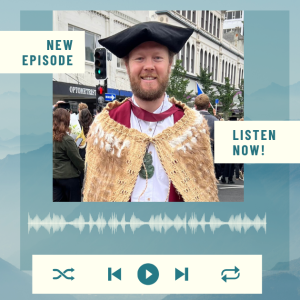
Te Tiriti 2024 and beyond | Dr Luke Fitzmaurice-Brown (Te Aupōuri/Pākehā) - Education removes the racist myths surrounding Te Tiriti, “we are going to need to confront some really challenging histories and also current events “.
Luke articulates what he thinks the role of the government is, and how we can utilise Te Tiriti principles for a more inclusive multicultural society, a greater framework for environmental protection and respecting indigenous practices.
Luke Fitzmaurice-Brown
Dr. Luke Fitzmaurice-Brown (Te Aupōuri/Pākehā) is an academic from Victoria University of Wellington where he is a lecturer in the Faculty of Law. Luke is interested in Kaupapa Māori approaches to law and policy. His research and teaching focuses on Te Tiriti o Waitangi, decolonisation, family law, and child protection. In recent years, Luke has written articles on Te Tiriti o Waitangi for Newsroom and The Spinoff. Luke lives in Pōneke with his wife Kelsey, son Oscar and cat Achilles.
Jul 17, 2024
Jul 17, 2024
44 min
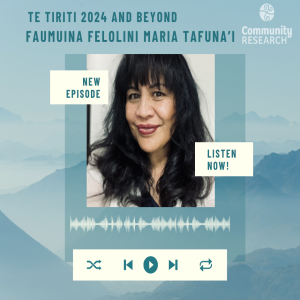
Faumuina hails from Samoa and is an advocate for Te Tiriti. She shares her thoughts about using education to enable greater allyship from both tangata Moana “why we shouldn’t let our cousins be pushed around”, and from all tangata tiriti. In this episode, Faumauina shares practical advice from the tool she co-developed, "17 habits of a valued treaty partner” a framework for becoming a better Te Tiriti ally.
Faumuina Felolini Maria Tafuna’i
Faumuina Felolini Maria Tafuna’i hails from the villages of Fasito’o-Tai, Asaga and Mulifanua in Samoa. She is a voyager, strategist and poet. Faumuina is CEO and Founder of Flying Geese which uses a framework based on celestial navigation and voyaging that she developed under the guidance of tohunga Hoturoa Barclay-Kerr. Flying Geese creates and delivers programmes to support indigenous peoples in the areas of entrepreneurship, strategic planning, and suicide prevention. Her book, My Grandfather is a Canoe, has been adapted for the stage and won multiple awards since its debut in March 2022. She was also the first Pacific Islander to become an Edmund Hillary Fellow.
–Tauiwi tautoko – resources–Flying Geese website–17 Habits of a Valued Treaty Partner
Jul 10, 2024
Jul 10, 2024
39 min
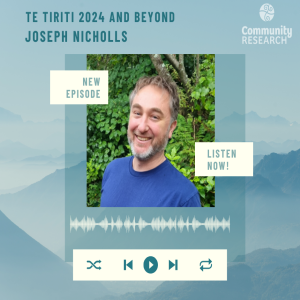
Joseph’s reflections on Facebook sparked a movement from tangata Tiriti in support of Māori, and in opposition to the proposed Treaty Principles Bill from the new coalition Government in late 2023.
Joseph talks about some of the humbling or uncomfortable feelings many Pākehā might experience when exploring our nation's history, and his understanding of Te Tiriti o Waitangi.
Link here - http://rb.gy/iywgp4
Joseph Nicolls
Joseph Nicolls’ ancestors are from England, Wales, Scotland and Sweden. His family has been in Aotearoa for several generations. Joseph considers himself a regular middle-aged Pākehā bloke. Born in Mōhua, top of the South, Te Tau Ihu, and has lived most of his life in Pōneke, Wellington. His career has included design and construction, as well as community, education and freelance facilitation work. These days, Joseph facilitates men’s groups, mental health first response with Coliberate Ltd and the Human Skills side of Tech at Dev Academy Aotearoa. Moving forward – he hopes to do more treaty education work for Tangata Tiriti.
Jul 3, 2024
Jul 3, 2024
25 min
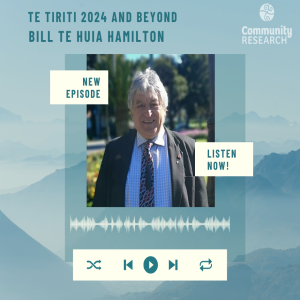
Te Huia Bill Hamilton talks about the emotions some face regarding Te Tiriti and addresses fears surrounding concepts of co-governance and rangatiratanga. “Through rangatiratanga we can all achieve our potential”
Te Huia Bill Hamilton
Te Huia Bill Hamilton (Ngāti Kahungungu, Ngā Rauru, Ngāti Raukawa) is a treaty facilitator and educator with Treaty Solutions. He has dedicated 25 years to educating Pākehā and Tauiwi on Te Tiriti o Waitangi. He is the lead advisor for the National Iwi chairs forum – and has acted as a treaty settlement negotiator, and as an advisor for NZEI Te Riu Roa. Bill initially served as a school principal, while also serving as a member and chair of the Māori Education Trust Board from 1993- 2015.
Jun 26, 2024
Jun 26, 2024
40 min
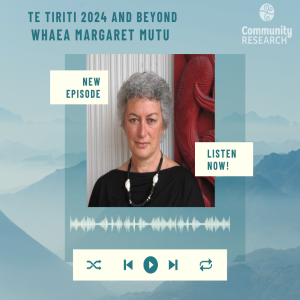
Makere reflects on her personal journey that led her to becoming a constitutional transformation advocate, her reflections on Te Tiriti and leadership taking us forward. “Tikanga is being recognised as a legal system that predated the rule of law”
Professor Mikaere (Margaret) Mutu
Margaret Shirley Mutu is a Ngāti Kahu leader, author and academic from Karikari, New Zealand and works at the University of Auckland, New Zealand. Professor Margaret Mutu (Ngāti Kahu, Te Rarawa and Ngāti Whātua) is Professor of Māori Studies at the University of Auckland. For the past two decades, Margaret has chaired Te Rūnanga-ā-Iwi o Ngāti Kahu. In that role, she represents Ngāti Kahu on the National Iwi Chairs Forum where she chairs Te Pou Tikanga, the Aotearoa Independent Monitoring Mechanism, which monitors New Zealand’s compliance with the United Nations Declaration on the Rights of Indigenous Peoples, and Matike Mai Aotearoa — the Independent Working Group on Constitutional Transformation.
Mutu went on to get a Masters and PhD as well as a diploma in teaching and has taught Māori language and Treaty of Waitangi Courses
Jun 19, 2024
Jun 19, 2024
16 min
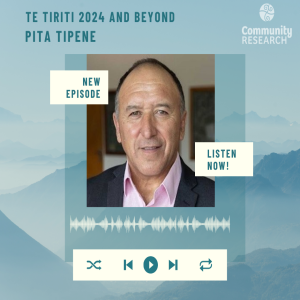
Ngati Hine leader, Pita Tipene shares his kōrero on the history of Te Tiriti, He Whakaputanga, and the outcome from the Waitangi Tribunal "affirming what everyone already knew that Ngā Puhi never ceded sovereignty."
Pita Tipene
Ko Mōtatau te marae, Ko Ngāti Te Tārawa te Hapu, Ko Ngāti Hine te Iwi. Ka papā te whatititiri, ka hikohiko te uira, ka wahierua ki runga o Motatau, e tū ana i te ao, i te po, ō Hikurangi, ngā kiekie whawhanui a Uenuku. Ko Taumārere te awa, Ko te puna i Keteriki, Keteriki, Kete Tangariki, ko Ngāti Hine Pukepukerau.
Pita Tipene (Ngāti Hine) has held the position of Waitangi National Trust Chair since February 2016. Pita holds a number of governance roles within his Iwi of Ngāti Hine as well as local, regional and national roles. Some of his roles include: Co-convenor at Ngā Toki Whakarururanga, Chair of Mōtatau marae and Chair of the Ngāti Hine Forestry Trust. Additionally, Pita sits on Te Kahu o Taonui (Taitokerau Iwi Chairs Forum) representing Te Rūnanga o Ngāti Hine. One of his other national roles is as the Chair of the Mānuka Charitable Trust which has the responsibility of maintaining and enhancing the Intellectual property of Mānuka in the global market. He has a passion for upholding He Whakaputanga and Te Tiriti o Waitangi.
Aug 11, 2022
Aug 11, 2022
46 min
Hoki Whakamuri, Haere Whakamua | thinking back, going forward – our webinars in audio.
This webinar, Co-Design for Well-Being: Giving tamariki the best start in life, was hosted in February 2020. We were joined by Angie Tangaere and Dr Penny Hagen from The Southern Initiative who have been working with whānau, community facilities, early child health services and researchers to understand how tamariki can be supported to have the best start in life.
Their approach brings together mātauranga, western science and lived experience of whānau to support systems change, and spaces, services and supports that enable tamariki to thrive. At the heart of their work is empowering whānau through an intentional tikanga and neuroscience approach.
Whānau lead the co-design process, developing insights and prototypes in response to the issues they identify as important. The approach disrupts traditional service-led, expert-led responses to social challenges and results in new capability, capacity and alternative whānau-led models driven by the outcomes that matter to whānau.
There is the potential to reconfigure spaces, services and support systems towards enabling families to connect, to build capability, to feel safe and have time out, to translate knowledge about parenting into their own world and support others in the same in way.
Supporting the service system to work with whānau as active participants in their wellbeing can be more challenging than expected. It can require changes to ourselves, our teams, our spaces, our services, our funding, our culture and reporting and ‘measuring’. It can challenge our ideas about what our role is in ‘helping’ families and children.
In this webinar, Angie Tangaere and Dr Penny Hagen share key insights about their learnings from this approach, as well as the emerging opportunities and challenges.
About the Presenters
Angie Tangaere
TSI Social Intrapreneur - The Social Initiative
Angie Tangaere was born in Papakura and raised in South Auckland with whakapapa to Ngāti Porou on her father’s side and Pākeha from Taranaki on her mother’s side. She graduated with a Law degree from the University of Auckland but decided not to become a lawyer.
Angie was keen to work at a community level and took up a role at Te Puni Kokiri working with iwi and Māori trusts in South Auckland. She then worked with the Ministry of Social Development in South Auckland communities looking for ways to develop better services and engagement with communities and whānau.
She moved on to a role with Māori health NGO, the National Hauora coalition before coming to work with TSI. She combines her experience with government agencies, community and whānau to develop and co-design whānau-led programmes, disrupting ineffective ‘business as usual’ systems.
Dr Penny Hagen
Co-Design Lead - The Southern Initiative
Over the last 15 years Penny has designed and led a range of participatory and social innovation initiatives in Australia and New Zealand working across community, commercial and academic sectors - with a focus on wellbeing. Penny specialises in projects with social outcomes and provides training and mentoring to design teams and organisations wanting to increase their social impact through the adoption of more participatory design and research approaches. Her practice has increasingly focused on understanding points of integration between health, design, youth development, evaluation, the built environment and policy in order to increase impact around social outcomes.
Penny has a PhD in participatory design and is a presenter and reviewer in academic and industry forums. Penny writes and speaks about co-design for youth and whānau wellbeing, social design, ethics and evaluative practices for social innovation and is a keen advocate for growing participatory and social design practices that are of Aotearoa. She is currently Co-design Lead at the Auckland Co-design Lab, helping to build co-design and social innovation capacity across public service and community teams.
Aug 11, 2022
Aug 11, 2022
1 hr 1 min
Hoki Whakamuri, Haere Whakamua | thinking back, going forward – our webinars in audio.
This webinar, Te Tiriti – Take action: Become a dynamic Treaty partner, was hosted in February 2022. We take you and your organisation forward in actioning Te Tiriti o Waitangi. Hear from our Te Tiriti podcast guest speakers as they kōrero with Kaye-Maree Dunn.
About the Presenters
Dr Kathie Irwin
Dr Kathie Irwin MNZM, PHD, MInstD is a third generation Māori, woman, educator. Her whakapapa is traced from diverse sources: Ngāti Porou, Rakaipaaka, Ngāti Kahungunu, the Orkney Islands, Scotland and Ireland.This interview outlines how public service and social justice are deeply embedded in her bloodlines. Her passion inspires her to contribute to nation building in innovative and creative ways that are framed by Ngāti Porou tipuna Sir Apirana Ngata’s whakatauākī (proverb) “E tipu, e rea”. This proverb speaks to the possibilities of bicultural and bilingual models of change that create authentic social inclusion, cultural intelligence and pluralism.Throughout her career Kathie has championed Māori Development, anti-racist education and Mana Wahine / Māori Feminisms.
Ali Hamlin-Paenga
Ali Hamlin is the Kaihautū – CEO of Ngāti Kahungunu Community Services, a kaupapa Māori organisation providing housing solutions & social support services across the wider Te Whanganui-a-Tara (Wellington) region. Ali provides her insights into how Te Tiriti informs her practice when advocating for equity and fair outcomes for whānau. She wants to ensure that whānau, no matter where they might be in life, have their mana intact, that they have the power and decision-making over their own lives.
Dr Chelsea Grootveld
Dr Chelsea Grootveld has worked in education policy, research and evaluation for the past 15 years. She is Director of Aiko Consultants Limited and is currently working with a team of kaupapa Māori centred evaluators on a formative evaluation of Te Pūtahitanga, the Whānau Ora commissioning agency for Te Waipounamu (South Island). Chelsea’s affiliations are to Ngai Tai, Ngāti Porou, Te Whānau ā Apanui, Te Whakatōhea and Te Arawa
Aug 11, 2022
Aug 11, 2022
38 min
Hoki Whakamuri, Haere Whakamua | thinking back, going forward – our webinars in audio.
This webinar, Valuing Our World Views: Indigenous Community at the Centre, was hosted in October 2019. Hear how indigenous community designers, Rebecca Kiddle and Danièle Hromek, are pushing the boundaries of the academy, community development and design practice and principles by ensuring that indigenous design, knowledge and practice and the voices of the community are front and centre in their work. Hear about some of their highlights and ongoing challenges with their work and the difference it is making for those who collaborate with them.
A recent publication of their work (in which Rebecca is an editor) is in an international publication: Our Voices: Indigeneity and Architecture (2018). Danièle challenged traditional academic referencing in her recently submitted PhD, eschewing non-indigenous theorists and creating a referencing system that privileges and validates indigenous knowledge in its various forms. Volume II of Our Voices is due to be published soon.
We recommend this webinar to anyone who is interested in Maori research, the design of communities and community spaces, place-based learning and indigenous design.
About the Presenters
Dr Rebecca Kiddle
Rebecca Kiddle (Ngati Porou, Nga Puhi) is a Senior Lecturer in Environmental Studies at Victoria University of Wellington. She has a PhD and MA in Urban Design from Oxford Brookes University, UK and an undergraduate degree in politics and Maori studies. She is the co-chair Poneke for Nga Aho Network of Maori Designers and a panel member on the Auckland Urban Design Panel. Her research focuses on Aotearoa New Zealand place identity and place-making, decolonising cities and the design of educational space.
Danièle Hromek
Danièle (Budawang of the Yuin Nation) is a spatial designer, speculative designer and public artist, fusing design elements with installations, sculptural form and research. Her design practice works in the intersection of architecture, interiors, urban design, performance design and fine arts. As an Aboriginal designer her work is grounded in her cultural and experiential heritage. Her work often considers the urban Aboriginal condition, the Indigenous experience of Country and contemporary Indigenous identities. Gaining her experience globally, she has lived in London, Paris, Barcelona, Vancouver and Sydney.
Aug 11, 2022
Aug 11, 2022
41 min
Hoki Whakamuri, Haere Whakamua | thinking back, going forward – our webinars in audio.
This webinar, Supporting New Zealand born Pacific youth: Understanding their community responsibilities and challenges and rewards they bring, was hosted in February 2021. We welcomed Soalaupule Asetoa (Sam) Pilisi, who works to mentor and support Pacific youth aspirations into tertiary education.
He explores experiences and perceptions of New Zealand born Pacific youth, of their various responsibilities to serve family, church and community. These responsibilities are complex in nature and require Pacific youth to devote time, energy, money and other resources to ensure key relationships are upheld with respect and love.
This webinar will help all those who work with Pacific youth to gain a better understanding of the community responsibilities these youth have and the challenges and rewards they bring, in order to provide enhanced holistic support to the young people they work with.
About the Presenter | Soalaupule Asetoa (Sam) Pilisi
Sam Pilisi is 2nd generation New Zealand born – Central Auckland raised with blood links to Niue (Avatele/Alofi Tokelau) and Samoa (Sato’alepai/Vailoa i Palauli). He has a BA (Social Sciences) MEdL (Hons) from AUT and Postgraduate Diploma in Arts (Pacific Studies) from the University of Auckland.
He is currently serving roles within the following community organisations: 360 Tautua Trust Board; Atuhau Avatele NZ United and West Auckland Pacific Forum.
Sam has worked in the education sector for the past 15 years, with a key focus on mentoring and supporting Pacific youth aspirations into tertiary education and he is currently working in the Future Students space at AUT.
Aug 11, 2022
Aug 11, 2022
1 hr 3 min
Hoki Whakamuri, Haere Whakamua | thinking back, going forward – our webinars in audio.
This webinar, White Fragility: Why It’s So Hard for White People to Talk About Racism, was hosted in December 2019. We joined renowned writer, trainer and speaker Dr Robin DiAngelo to better understand how we can engage and partner more effectively in cross-cultural dialogue, anti-racist action and change.
Dr Robin DiAngelo’s area of research is in Whiteness Studies and Critical Discourse Analysis and she has a PhD in multicultural education. DiAngelo has been a consultant and trainer for over 20 years on issues of racial and social justice.
After coining the term “White Fragility” in an article, to describe the defensiveness that even the most well-meaning white people exhibit when their ideas about race and racism are challenged, she went on to write a book of the same name with a subheading ‘Why It’s So Hard for White People to Talk About Race’. Her book was released in June of 2018 and rapidly rose to the top of the New York Times bestseller list.
Aug 10, 2022
Aug 10, 2022
56 min
Hoki Whakamuri, Haere Whakamua | thinking back, going forward – our webinars in audio.
Join Ngati Porou psychiatrist Dr Diana Kopua who gives us an insight into her work developing Mahi a Atua, a Māori approach to well-being which draws on the stories, narratives and healing practices of te ao Māori. Her work in Tūranganui A Kiwa has delivered significant health benefits for whānau and the services in the region.
It is an approach that encourages practitioners to actively engage in Māori interventions that draw from the Māori creation and custom stories known as pūrākau to understand how tipuna understood and made sense of their realities.
Mahi a Atua is not just a set of techniques or a culturally sensitive therapy. It is a drastically different way of conceptualizing the lived experience of the Maori. It is a way of being, and strengthens our relationship with whakapapa, relationships with our own stories. The pūrākau (storytelling) help us to collectively design and operationalise indigenous knowledge systems that improve all of community outcomes.
Join Dr Kopua to learn about Mahi a Atua and the importance of language and narratives in how we understand our world and improve our being, our whānau and our communities.
Resources
Article about Dr Di and Mark Kopua’s practice
Atua Matua Māori Health Framework created by Dr Ihirangi Heke
More coming soon
About the Presenter | Dr Diana Kopua
MBChB; Fellow RANZCP; Iwi: Ngāti Porou
In the mid-1990’s Dr Diana Kopua developed Mahi a Atua, an indigenous approach that responds to ongoing issues regarding institutional racism and inequity for Māori within New Zealand health services and society. The Mahi a Atua approach has been utilised by multiple practitioners across various sectors within New Zealand society including art, health, education, justice and the social services sector. Diana, in collaboration with her husband Mark Kopua, a tohunga and Tā Moko practitioner, are committed to indigenising their respective communities of practice and are pioneers within their fields.
Aug 10, 2022
Aug 10, 2022
47 min
Welcome to our second series - Hoki Whakamuri, Haere Whakamua | thinking back, going forward - our webinars in audio.
This webinar, Hear from us, not about us: The power of refugee-background research, was hosted in September 2021. It was a celebration of the launch of our new collection of research focused on refugee-background and migrant experiences in Aotearoa.
About the Presenters
Batool Arif
Batool Arif, originally from Pakistan, is a mother of two lovely girls and a wife to a very supportive husband. She has lived in Wellington, New Zealand for the last eight years, and works at ChangeMakers Resettlement Forum as a Community Advocate. She faced many challenges during her resettlement in New Zealand. Therefore, she is passionate about bringing system-level change to make Aotearoa a fair and just society for everyone regardless of race, gender, or religion. In addition, she is an advocate for women's rights both in the community and outside her community.
Dr Irene Ayallo
Dr Irene Ayallo is a social practitioner (Registered Social Worker) and educator. She currently teaches social work and community development at Unitec (Social Practice). Her teaching and practice in this field is significantly informed by interdisciplinary (multidisciplinary) background and knowledge, having undertaken research and practiced in a range of areas. These have included: extensive work in HIV and AIDS prevention and care, primary sexual violence prevention, gender-based violence (specifically Intimate Partner Violence), pastoral care and counselling to tertiary students, research methods and data analysis on a range of topics, and work with marginalized groups (including migrant and refugee background communities).
Dr Zhiyan Basharati
Dr Zhiyan Basharati is an activist, advocate, champion and academic. She was born and raised in a Kurdish refugee camp. Since she arrived in New Zealand has established and managed many advocacy and support groups for migrants and refugees in her home town of Christchurch. She was a founder and advisor of the New Zealand National Refugee Youth Council (NZNRYC); recently Zhiyan and her colleagues have established the Refugee Research Centre (RRC), “Research by Refugees for Refugees".
She is currently working with Christchurch Victims Organising Committee (CVOC), the Depression Support Network and Te Puna Oranga and is an individual consultant researcher working in collaboration with University of Canterbury on refugee entrepreneurship research.
Dr Sara Kindon
Sara Kindon has been supporting and carrying out participatory research with people from refugee backgrounds since 2005. This research has mostly involved refugee-background youth and women collaborating with her postgraduate students. Some project findings have led to policy changes in TEOs to recognise refugee-background learners in equity policy and practice, more inclusive practices by Wellington sport and recreation providers, improved high school homework club activities, and the launch of the National Tertiary Network to Support Refugee Background Learners in 2019 in partnership with the Tertiary Education Commission and Vic.Without.Barriers. In 2019, Sara also became the first female professor of Human Geography and Development Studies at Victoria University of Wellington. She has published widely on participatory, creative and visual methodologies, complicity in non-Indigenous-Indigenous research partnerships, refugee resettlement and belonging in Aotearoa, as well as gender and international development.
Resources
Community Research special collection of research – Refugee-background and ethnic migrant communities
National Tertiary Network to Support Refugee Background Learners – private Facebook group (involves uni, polytechnics, Wānanga and private training enterprises)
NZ Human Rights Commission: National Action Plan Against Racism Survey – Have your say before 23rd November 2021 – What is your vision for an Aotearoa New Zealand that is free of racism?
Knowledge, voice and power – Forced Migration Review are calling for submissions on the following: In the field of forced migration, whose knowledge is valued and whose voices are heard? What needs to change in order to address significant power imbalances in representation in policy, practice and academia? Deadline 15th February 2022. More details here.
Feb 2, 2022
Feb 2, 2022
23 min
Ali Hamlin is the Kaihautū-CEO of Ngati Kahungunu Community Services a kaupapa Māori organisation that provides housing solutions and social support services across the wider Te Whanganui-a-Tara (Wellington) region.
Ali provides her insights into how Te Tiriti informs her practice when advocating for equity and fair outcomes for whānau. She wants to ensure that whānau, no matter where they might be in life, have their mana intact, that they have the power and decision-making over their own lives.
You can connect with Ali here
Feb 2, 2022
Feb 2, 2022
28 min
Mike Smith (Ngāti Kahu, Ngāpuhi) is an educationalist and has spent the last 40 years focussed on taking action where it matters. Although some of his favorite activities are gardening, hunting and fishing, Mike has also used his love for his community and the Taiao to advocate for the health and wellbeing of Papatūānuku highlighting the irreversible impacts of climate change on indigenous communities.
Of late this has included taking Austrian Oil Giant OMV's chief executive for Crimes against Humanity and the Environment, including genocide, in the International Criminal Court.
Mike has also actively supported the efforts of Iwi to push back on oil companies such as Petrobras undertaking oil exploration activities in Tribal Territories and has also the National Iwi Chairs Co-Leader for the Pandemic Response.
In this interview Mike shares the impact his Mother had on his life, especially in reminding him of his identity and his tūpuna who were original signatories to Te Tiriti. We also hear about his earlier career as a social worker and the key people who influenced his thinking and his reflection on nation-building and taking action.
Across the board, Mike has been consistent in pointing out the way the Crown has continuously failed to meet their promise and obligations to Tangata Whenua, yet there is hope, where there is a willingness to "walk through the door of transformation".
To connect with Mike and his mahi you can find him here
Feb 2, 2022
Feb 2, 2022
37 min
Dr Kathie Irwin MNZM, PHD, MInstD is a third generation Māori, woman and educator.
Her whakapapa is traced from diverse sources: Ngāti Porou, Rakaipaaka, Ngāti Kahungunu, the Orkney Islands, Scotland and Ireland.
This interview outlines how public service and social justice are deeply embedded in her bloodlines. Her passion inspires her to contribute to nation building in innovative and creative ways that are framed by our Ngāti Porou tipuna Sir Apirana Ngata's whakatauākī (proverb) "E tipu, e rea". This proverb speaks to the possibilities of bicultural and bilingual models of change that create authentic social inclusion, cultural intelligence and pluralism.
Throughout her career Kathie has championed Māori Development, anti-racist education and Mana Wahine / Māori Feminisms.
To connect with Kathie and her work you can find her here
Feb 2, 2022
Feb 2, 2022
28 min
In this episode Kaye-Maree Dunn speaks with Dr Chelsea Grootveld.
Chelsea is Ngāi Tai, Ngāti Porou, Te Whānau a Apanui, Whakatōhea and Tuhourangi.
She is passionate about whānau centred and whānau led education, health and wellbeing. Chelsea has a strong commitment to creating values-based research and evaluation models that make sense and add value to whānau, hapū, iwi and communities. In this conversation, Chelsea shares her journey of deepening her political awareness in Te Ao Māori and how Te Tiriti is a critical part of her mahi as a kaupapa Māori evaluator. Her evaluation company Aiko allows her to pursue projects that genuinely interest her, are challenging and transformative.
To connect with Chelsea you can find her here
Feb 2, 2022
Feb 2, 2022
1 min
Here is a beautiful taster of what to expect in our stunning first podcast series focussed on Te Tiriti o Waitangi. Meet Dr Chelsea Grootveld, Mike Smith, Dr Kathie Irwin and Ali-Hamilin Paenga
Nau mai haere mai
Feeling Inspired?
Here are more resources and tautoko to help you take action
Discover more about Te Tiriti in Practice
Check out our Community Research
and our Whānau Ora Research
Also visit our evaluation resource site
Go to whatworks.org.nz
Whakatairangatia i te mana o te rangahau ā-hāpori me te mahi tahi
These podcasts are designed to bring together diverse perspectives and ideas that can support community practitioners to connect and apply new ideas and thinking to your mahi.
Nau mai, haere mai - we are so grateful you have come to join us here.
A Podcast by Community Research